
Cypress City Directory Collections
The best verified lead for a Cypress city directory is the Orange County regional run listed by the National Archives and Records Administration. The California State Library guide adds a statewide catalog route covering directory catalogs and telephone books. For local material, Cypress Library Special Collections is the contact, though its public branch page lists no complete publisher or year inventory. Begin with the collection table. Then confirm the exact volume, place heading, and access method with the institution that holds it. That step saves hours of guessing.
| Collection | Years | Where Held | Access |
|---|---|---|---|
| Orange County regional city directories including Cypress | 1926, 1929 | NARA directory table and facility holdings | Consult NARA availability |
| California city-directory catalog | Holdings vary by title | California State Library | Catalog, reading room, or copy request |
| California telephone-book catalog | Holdings vary | California State Library | Query Cypress and Orange County |
| Cypress local history | Unspecified | Cypress Library Special Collections | In-library inquiry and catalog check |
| Federal census schedules | 1790 to 1950 public nationally | NARA, library, and genealogy access | 72-year release rule |
Not every shelf is the same kind of source. A city directory lists residents and businesses, a telephone book lists a subscriber, and a census records an enumeration at one defined moment. Keep the collection description beside every Cypress volume citation you make.
NARA Cypress Directory Runs
NARA's circa-1930 city-directory table places Cypress within Orange County coverage for 1926 and 1929. Neighboring communities such as Anaheim, Buena Park, Stanton, and Los Alamitos appear in the same regional structure. That regional shape fits Cypress history well. The community was agricultural before incorporation. So an early Cypress city directory may sit under an Orange County title rather than one bearing Cypress alone.
Treat the NARA listing as a lead, not as an image of an individual entry. No official digitized Cypress entry image exists here. Before quoting a name or address, capture the title page, copyright year, coverage statement, abbreviation page, and the entry itself. Use the actual 1926 or 1929 volume. A neutral inventory of common fields is not verified typography from a Cypress page.
The Cypress NARA city-directory table makes the regional scope visible.
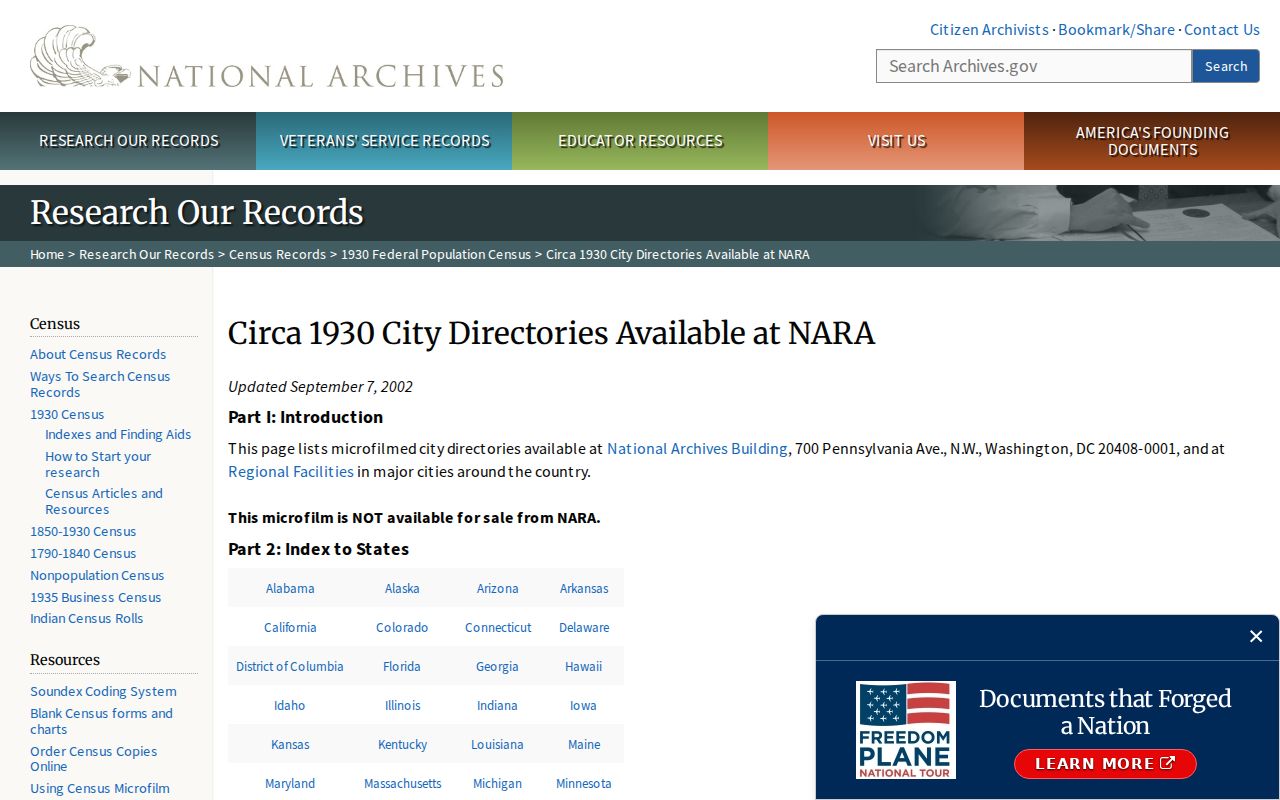
The table supplies a year and place lead. A researcher can carry it to a NARA facility or to a related library catalog for the next step.
Cypress Directory Catalog Search
The California State Library’s Orange County research guide is the best verified statewide routing tool for a Cypress directory search. It points to a specialized City Directory database and a separate Telephone Book database. Query “Orange” and then individual Orange County city names. Holdings vary by title, so a Cypress catalog hit is not the same as a promise that a full scan or local copy can be opened from home.
Use the catalog record to note title, place, year, format, and call or holding information. Ask about reading-room access and copy service when an item is not online. The guide also helps bridge the gap when a Cypress-specific publisher, reverse-directory run, newspaper reel, or telephone volume is not itemized on the branch page.
The California State Library guide for Cypress is a useful research companion because it treats Orange County as a place hierarchy, which matches the regional nature of the oldest verified Cypress entries.
The California State Archives research entry image represents a Cypress archival catalog route rather than an entry image.
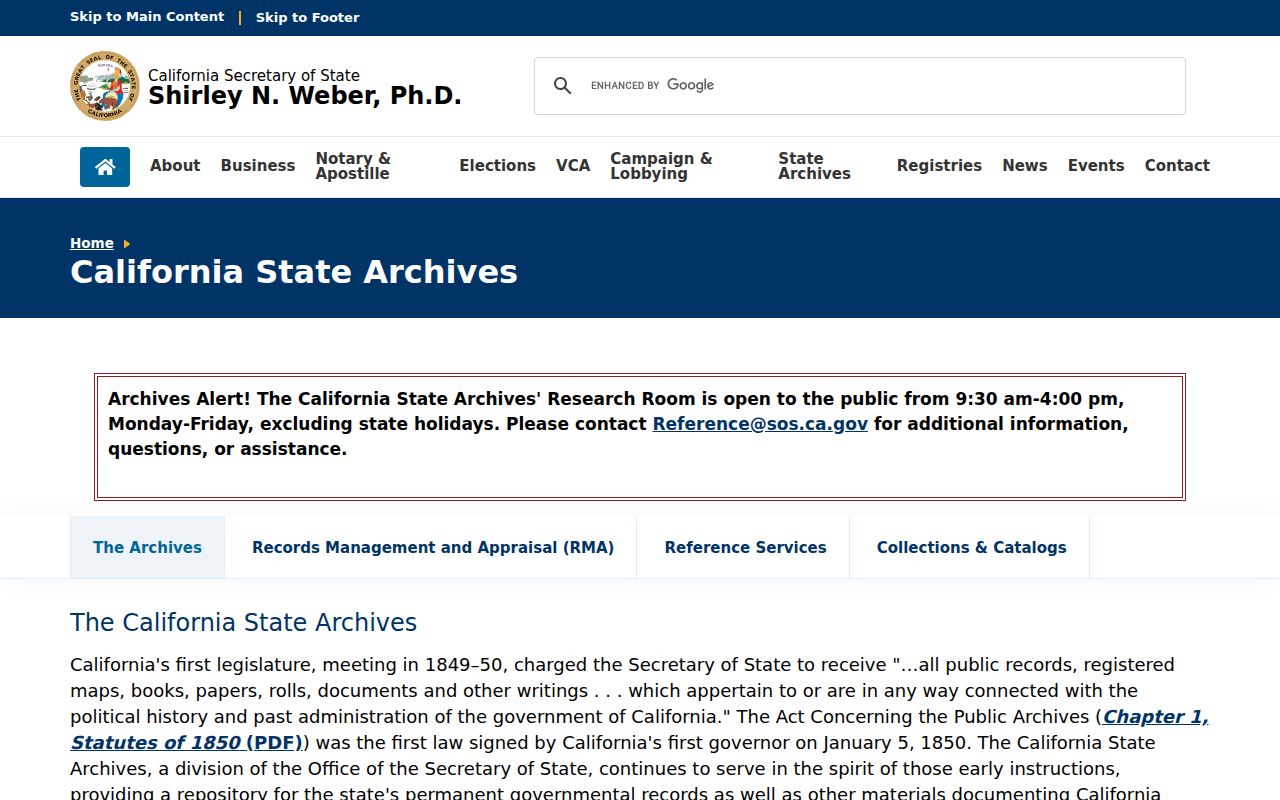
Record the catalog wording exactly, especially when a title uses Orange County instead of Cypress. The State Library guide offers a separate directory catalog route worth using.
Cypress Directory Library History
Cypress Library, at 5331 Orange Avenue, Cypress, CA 90630, is the hyperlocal contact. Its branch page lists Cypress local history in Special Collections, public computers, and Wi-Fi. Hours cover Sunday, Monday through Thursday, and Saturday. Friday closure should be reconfirmed. The page does not enumerate city directory publishers, years, reverse directories, or obituary indexes. It also omits newspaper microfilm and subscription databases.
Send a focused question instead. Include the Cypress street or family name, the desired year. Add words like "directory volume," "telephone book," "reverse directory," or "local history." Ask staff to check the OCPL catalog and to say whether the item sits on a shelf, rests in a special collection, runs through a terminal, or is held elsewhere. Never describe an unconfirmed run as a local holding.
The Cypress Library branch page is the source for contact details and current hours.
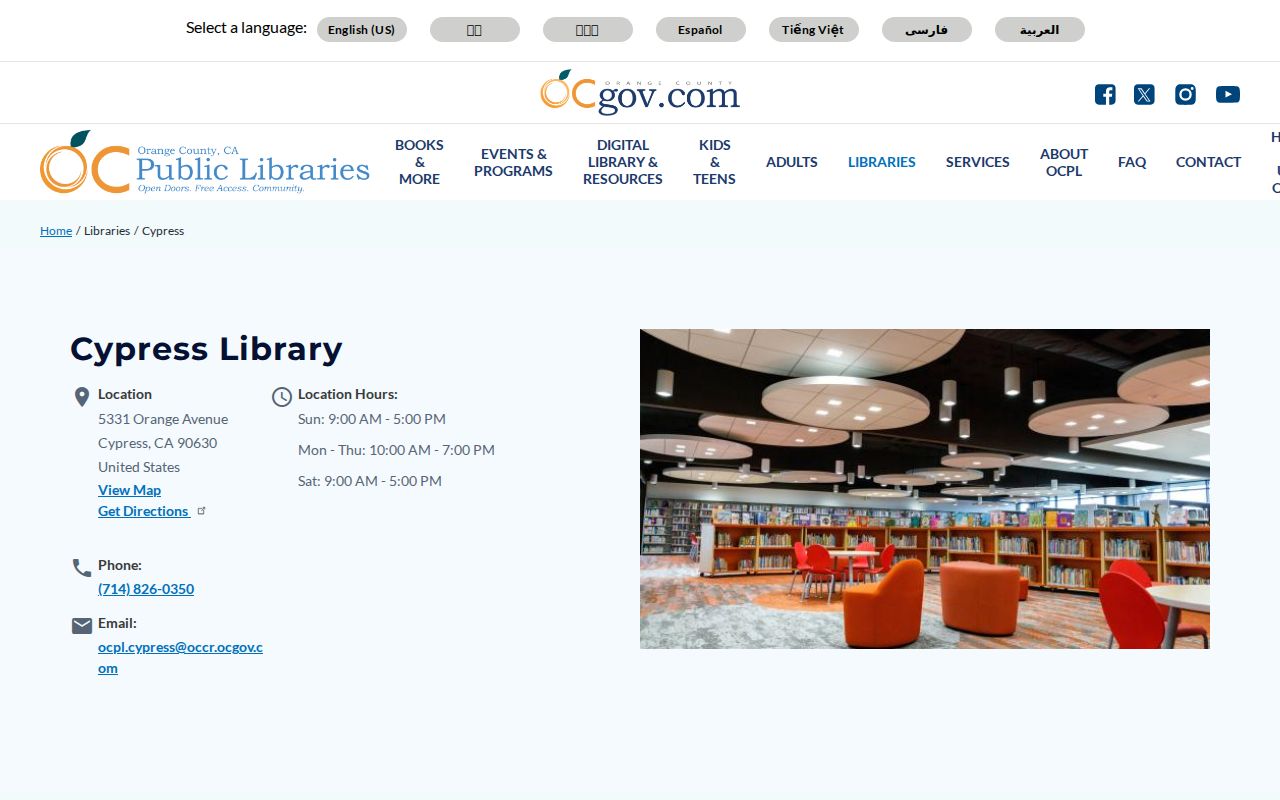
Staff consultation can also help with multilingual name variants. The branch's collections include Arabic, Chinese, Hindi, Japanese, Korean, Spanish, and Tagalog materials.
Reading Cypress Directory Entries
Read a Cypress city directory entry field by field. A neutral period inventory of fields is fair. A claim about the exact layout or abbreviations of a Cypress volume is not. Preserve the printed spelling and marks exactly, and photograph the volume key before interpreting any shortened word. The key is the translator.
| Term | Meaning |
|---|---|
| Name | Surname, given name, or initial; spouse may appear in parentheses |
| Occupation or business | A period activity field that helps distinguish people with the same name |
| Home address | House number and street, with local abbreviations explained by the volume |
| Household mark | A run may distinguish a householder, boarder, or other entry type |
| Widow notation | A note naming a deceased spouse can be a genealogy clue |
| Reverse section | When present, street, house number, and occupant or telephone order |
- Criss-cross directory
- The street-order half of a directory, useful when an address is known before a name.
- Householder index
- An alphabetical route to the principal listed person or household, depending on the volume.
- Abbreviation key
- The volume’s front matter that explains short forms and symbols. Photograph it before the entry.
A directory entry records what the publisher or canvasser printed for that edition. It does not show that every adult at the address was listed. Nor does it prove the person stayed there the whole year. Treat each entry as a snapshot, not a lease.
Telephone Books Beside Cypress Directories
A Cypress city directory and a telephone book answer different questions. The phone book lists subscribers, skips unlisted numbers, and may still show an exchange name. The city directory goes further. Occupation, spouse, street address, and a reverse section often appear alongside the name. Because the State Library catalogs the two formats separately, search both. A printed Cypress directory run can grow thin, and the telephone shelf fills gaps.
Later tract-era Cypress rewards different sources. School yearbooks, newspaper announcements, assessment or deed evidence, and Cypress building permits often outperform a pre-incorporation directory. A phone listing gives a name and number. A permit gives a project date. A newspaper ties a spouse, school, business, or address together. Each clue still needs its own source and date.
Never read a subscriber record as a complete household. An entry can be missing, shared, outdated, or attached to a business rather than a home.
Cypress Criss-Cross Directories
The criss-cross section is where a historical directory meets a street question. Streets come first, then numbers, then occupants and telephone details. Try it after an alphabetical search fixes a spelling. Try it first when a Cypress address is the only clue you hold. Reverse pages can even expose adjacent households. Coverage and abbreviations still control what the marks mean.
Photograph the whole context together: title page, copyright, coverage statement, abbreviation key. Include the Cypress reverse page as well. A lone cropped entry proves nothing about publisher, year, or scope. It cannot even show the page's origin. Did it come from a city directory or a telephone book? Treat any listing as a single time mark, not a continuous occupancy record.
Modern parcel work follows a different path. The Cypress street directory page builds on the county map, APN, deeds, and permits. The historical criss-cross page belongs on the older shelf. Keep the two trails separate.
Trace Cypress Directory Families
A Cypress directory works best as a sequence, not a single volume. Begin with a known person, address, spouse, or business. Copy the exact spelling and every field. Move one Cypress edition at a time. Track the first and last appearance, each address change, and any widow or "removed to" wording. When the place and time fit, pair 1929 with the 1930 census and 1926 with deeds.
- Find the name or address in the earliest confirmed Cypress or Orange County volume.
- Copy the entry and the volume key before moving to the next year.
- Check the reverse pages for the street and nearby listed households.
- Pair the directory time mark with the 1930 or 1950 public census schedule.
- Use deeds, permits, newspapers, probate, cemetery clues, or an obituary to test a move or death.
A disappearance has many explanations. Relocation, death, omission, an unlisted telephone, a publisher change, or an indexing error can all blank out a name. None of them fixes a move date. Preserve the source language, and confirm an important identity through the Cypress resident lookup sources: a court case, deed party, business filing, or vital copy.
Dairy City Directory Clues
Cypress carries a name change that every directory search should know. Its Orange County agricultural community incorporated as Dairy City on July 24, 1956. A city history counted 1,616 people and 24,000 cows at that moment. An August 6, 1957 straw vote, 208 to 41, brought back the name Cypress. The transition period matters here. Search both names across municipal minutes and election notices. Newspapers and directory catalogs from those years may list either name.
| Era | Search Vocabulary | Record Meaning |
|---|---|---|
| Before 1889 | Los Angeles County, land grants, federal land systems | Orange County did not yet exist |
| Pre-incorporation | Cypress community, Orange County, agriculture, Lincoln and Walker | Place term without a Cypress city government |
| July 1956 to 1957 | Dairy City | Incorporation-era municipal vocabulary |
| After the name vote | Cypress, while retaining Dairy City as an alias | Modern municipal continuity |
That name shift explains a common miss. A modern search string can overlook an older Cypress family that a regional collection plainly holds.
Cypress Directory Catalog Gaps
Several holdings still need staff confirmation. Exact Cypress publisher and year runs at the branch remain open questions. So do reverse-directory shelf details, a digitized entry image, precise FamilySearch collection names with image restrictions, and Cypress-specific Sanborn coverage. The right response is a gap note and a catalog inquiry. Guessed years and invented scans help no one.
Ask the library or State Library for the title page and year. Ask also about geographic coverage and access terms. For a Cypress family or house history, pair the answer with Orange County deed indexes. Add the 1926 and 1929 NARA lead, the 1930 and 1950 census, newspaper runs, school yearbooks, permits, and probate or obituary evidence. Each source keeps its own date and role. That discipline yields a stronger Cypress directory trail. It stays specific where records stand firm, and explicit where the shelf still awaits confirmation.