
Cypress Previous Residents Sources
Building a previous residents trail means pairing current Cypress property evidence with older people-and-place sources. Keep the source and date attached to every fact. That habit separates past occupants from past owners cleanly. No single Cypress record spans every era. So start with the source that holds the address steady. Then layer in a directory or household listing. It should place a person at a moment in time.
| Source | Years It Covers | Where Held | What It Shows |
|---|---|---|---|
| Cypress recorder identifiers | Pre-1982 book/page; 1982 forward year and instrument | Orange County Clerk-Recorder | Ownership instruments and legal description |
| Cypress regional directories | 1926 and 1929 verified | NARA directory table and facility holdings | Name, address, occupation, and possible reverse entry |
| Cypress federal census | Through 1950 public | NARA, library, genealogy access | Household and adjacent enumeration order |
| Cypress municipal records | 1956 onward in principle | City Clerk and city departments | Incorporation, permits, planning, and administrative files |
| Cypress Assessor snapshot | January 1, 2026 roll shown online | Orange County Assessor | APN, values, and exemption anchor |
| Cypress probate and obituaries | Case or publication specific | Superior Court, newspapers, library | Death, heirs, and family clues |
Treat the years in the table as coverage anchors, not a promise that every address appears. The exact Cypress house-history route depends on the parcel's tract, legal description, age, and what records survive.
Cypress Previous Residents Start Here
Start with a verified current Cypress owner or purchase instrument, never a guessed name. Normalize the address through USPS and county GIS. Copy the APN, and locate the present instrument through a known party or identifier. The current deed carries the essentials: grantor, grantee, recording date, instrument number, and legal description. A grantor transfers an interest. A grantee receives it. The Cypress RecorderWorks index searches recorded parties rather than street addresses. It offers no online image viewer. Search the identified party and note the document type, role, date, and identifier. Then follow the official Cypress copy instructions once the instrument is known.
House-history terms. A Cypress chain of title is the sequence of recorded interests. A Cypress legal description identifies the land in title language. A Cypress APN is the county parcel key. A Cypress deed index is a lead, not the certified instrument.
The Cypress Assessor value page is not a deed. It can anchor the APN and roll date, while the recorder's instruments supply the actual chain.
Cypress Previous Resident Deed Search
With the current Cypress purchase deed in hand, search the seller or grantor as a grantee in earlier records. That second clue must still match the Cypress legal description, APN, subdivision, and parcel context. Repeat one instrument at a time. Names collide. Street numbers shift. The legal description is the anchor that keeps the chain honest.
- Record the Cypress current grantee, grantor, date, instrument number, and legal description.
- Search the grantor’s earlier grantee records in the likely time span.
- Compare the legal description and APN before accepting a match.
- Open the next identified instrument through the county copy process.
- Stop or mark a gap when the source does not prove continuity.
A Cypress chain of title tracks recorded interests, not every occupant. A person can sign a deed without ever living at the parcel. A long-term resident can be absent from every instrument. That gap is normal. Directories, census records, permits, probate, and obituaries add the household layer the deeds leave out.
Cypress Previous Records 1982 Divide
Orange County's practical Cypress identifier break falls at 1982. From 1982 forward, the copy page works with a recording year and a six-digit instrument number. Before 1982, bring book, page, and instrument details when you have them. The format changes there. That is all. It is not a start date for the online index. The county performs no title searches by phone, mail, in person, or at the counter. Call (714) 834-2500 for procedure questions, not for an open-ended Cypress house history. Mail a known copy request to 601 N. Ross Street, Santa Ana, CA 92701, with a self-addressed stamped envelope and payment to County of Orange. Copies cost $1 per page, plus $1 to certify each document or map. Keep the instrument date distinct from the date a copy was ordered and the date the index was searched.
Hold the Cypress Address Record
Cypress street addresses are convenient but unstable. A number may carry a unit suffix. It may show a directional change, an old subdivision label, or an earlier rural description. The legal description and APN hold the parcel steady while the visible address drifts. When a number fails, try cross streets. Tract names, lot and block terms, and prior party names work too. The Cypress OC Public Works GIS portal displays parcel geometry and adjacent lots. Not every layer, buffer control, or export option is published. Rely on what the map itself shows. A new Cypress subdivision may gain a legal lot before it has a stable delivery address. A former agricultural parcel may lack a modern number entirely. The legal description is a continuity tool. It does not prove one family occupied the land throughout. Pair it with a recorded instrument and an independent household source.
Cypress Directory Time Marks
NARA lists Orange County regional city-directory coverage that includes Cypress for 1926 and 1929. Those years matter because the Cypress area had not yet incorporated as a city. A listing can yield a surname, given name or initial, spouse, occupation, and address. Some entries also add a reverse street entry. The entry image and publisher typography call for a look at the source itself. Start with the Cypress NARA table to confirm the regional lead. Then ask the California State Library about its city-directory and telephone-book catalogs. Ask Cypress Library whether local-history material fills a later gap. Photograph the title, coverage statement, copyright, abbreviation key, and entry together. A directory year is a time mark. It proves nothing about continuous occupancy. A disappearance can mean relocation, death, omission, or simple publisher error.
Pair Cypress Previous Resident Households
The federal census is the household layer of Cypress previous residents work. The 1930 and 1950 schedules both survive in public form. Pair the 1929 directory with the Cypress 1930 census. Then lean on the Cypress 1950 census for the midcentury household near the pre-incorporation years. Enumeration district maps matter here. So does adjacent household order, which a surname index alone cannot give you.
- Write down the Cypress directory spelling, address, spouse, and occupation clue.
- Search the matching census year and inspect the page, not only the index line.
- Compare neighbors, household ages, street order, and place descriptions.
- Mark differences as clues, not corrections, until another source resolves them.
Cypress OCR is imperfect on old handwriting. It stumbles on non-English names too. Keep the original script and diacritics where a source supports them, and write down every transliteration variant you meet. The 72-year rule keeps the 1960 census closed until 2032, which leaves 1950 as the latest public midcentury anchor in 2026.
Dairy City Cypress Resident Records
The Cypress address trail changes names in a hurry. It began as unincorporated Orange County land. Dairy City incorporated on July 24, 1956. A straw vote of 208 to 41 on August 6, 1957 brought the name Cypress. So look for Cypress municipal material from 1956 and 1957 under Dairy City. Look for earlier land and court records under Orange County. Search anything before 1889 under Los Angeles County or the state and federal land systems.
Cypress city history paints a dairy town of about 1,000 people in the 1940s. The town also held about 13,000 cows. At incorporation the count stood at 1,616 people and 24,000 cows. That arithmetic explains a lot. Agricultural parcel descriptions, tract maps, regional directories, and newspapers often beat a long run of municipal directory volumes for this community.
The place-name story is not decoration for a house file. It decides which record source fits your search. That source could be a catalog term, minute book, election notice, or newspaper heading.
Cypress Past Resident Records
Cypress permits and planning files can date construction, alterations, applicants, and contractors. They can also date scopes, tract maps, and public notices. A permit proves a filing, not residence. A Cypress probate case can name a decedent, petitioner, and heirs. This applies where the public file allows. Obituaries point to relatives, dates, cemeteries, schools, and former addresses. They are still secondary evidence best checked against vital or probate sources.
Search Cypress newspapers by address, subdivision, spouse, business, school, and surname. Cemetery and memorial sites can yield burial clues, though a user-submitted memorial is no certificate. Naturalization, yearbook, and church or club material depend on the era and the custodian. The city publishes no Cypress-specific Sanborn year list or public association roster. Treat neither as an established house-history source.
Use the Cypress records center for a known city file. Request a narrow Cypress CPRA search if the item is not online. California Government Code section 7922.535 sets the public-records response clock. It also sets the written notice an agency should send when it needs more time. A Cypress request should state the address, parcel, record type, and date span plainly. Keep the request and response dates with your house-history notes. Read the current California public-records response statute for the governing text.
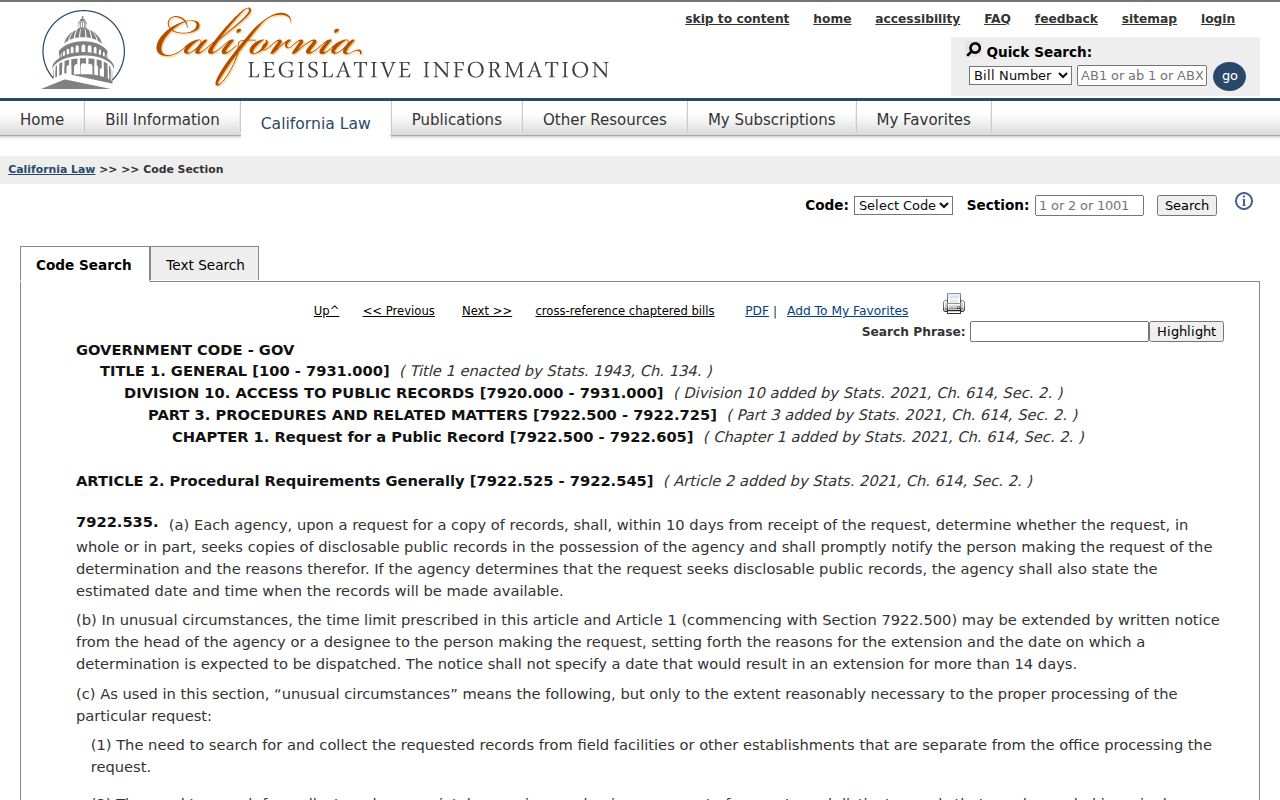
The statute is a process reference, not proof that an agency holds a particular past-resident record. Keep the written response beside the source gap it addresses.
Cypress Previous Resident Records Privacy
Cypress previous residents research is strongest inside a documented house history. Every final claim should name the record and date behind it. Recorded owners, directory entries, census households, permit contacts, probate parties, and obituaries are not interchangeable. A resident can be missing from the deed. An owner can be missing from the household. A directory can omit a person entirely.
Protected Cypress addresses, current voter information, DMV data, utility accounts, and private rosters should never be stitched into a personal dossier. Cypress Safe at Home shields qualifying people behind a substitute mailing address. A source can be missing. Mark the Cypress gap and ask the custodian instead of filling it with a commercial compilation.
Lawful house history. Use a Cypress address trail for genealogy, property history, estate and heir research, or civic records work. Do not use it to stalk, threaten, harass, or harm a person.
The current parcel and APN route belongs to the Cypress street directory workflow. The historical shelf belongs to the Cypress city directory collections, and the backward trail joins the two.